
When you ask about a departure, you want to confirm which service you mean, when it leaves, and where it leaves from. A short question followed by a clear confirmation keeps those details together.
You do not need a long speech. Start with the destination or service, ask one question at a time, and repeat the latest time and place. This guide focuses on departure details, not choosing a route or following directions.
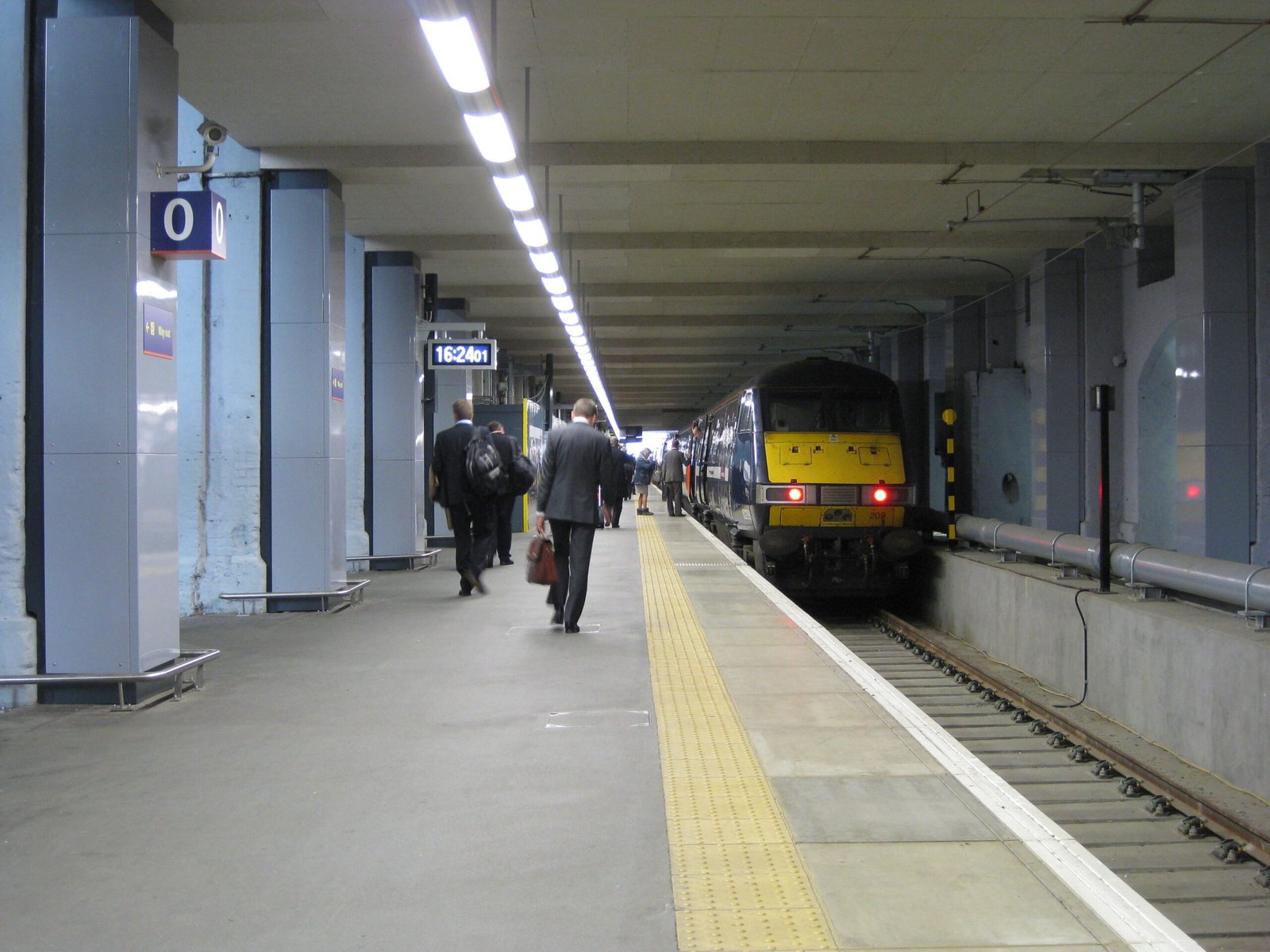

Name the train or bus
A question such as “When does it leave?” can be unclear if several services are being discussed. Name the train or bus first.
- “Excuse me. What time does the train to Chicago leave?”
- “What time does the bus to New York leave?”
- “Is this the bus to New York?”
The words “to Chicago” identify the destination in the first question. You can also use a service number when one is part of the information you have: “What time does bus 12 leave?” Here, bus 12 is just an invented example.
Ask when it leaves
“Leave” is a useful everyday verb. “Depart” has the same meaning in these examples, and “departure time” means the time a service leaves. “Arrival time” means the time it reaches a place; it is a different detail.
Compare these questions:
- “What time does the train leave?” asks for the departure time.
- “What time does the train arrive?” asks for the arrival time.
If someone answers “nine ten,” you can check: “Nine ten in the morning?” In writing, 9:10 a.m. means nine ten in the morning; 9:10 p.m. means nine ten in the evening. The examples here use this twelve-hour format. You may encounter other formats, so asking the person to clarify is part of the exchange.
Ask where it leaves from
Time and place answer different questions. After asking when the service leaves, ask where it leaves from.
- “Which platform does the train leave from?”
- “Which bus stop does the bus to New York leave from?”
A platform is the area beside a train where passengers get on or off. A bus stop is a place where a bus stops for passengers. In these fictional examples, a platform number identifies the train’s departure place and a bus-stop letter identifies the bus’s departure place. Labels vary; do not assume that every service uses the same words or numbering.
For example, “Platform five” and “Bus stop C” describe different departure places. “Which bus stop does it leave from?” asks about the starting place, not where to get off later.
Check a delay or change
“Delayed” means later than planned. A scheduled time is the planned time; an expected time is an estimate. An estimate is not a guarantee.
You can ask:
- “Is the train delayed?”
- “What time is it expected to leave now?”
- “Has the platform changed?”
- “Does the bus still leave from stop C?”
If you hear a new time or place, use that information in your confirmation rather than repeating the original details. If you miss a number, ask directly: “Could you repeat the platform number, please?”
Read a complete train exchange
Maya and a staff member are fictional adults. The train’s planned departure is 9:10 a.m. from platform three. In this exchange, both details change.
Maya: “Excuse me. What time does the train to Chicago leave?”
Staff member: “It’s scheduled for nine ten this morning, but it’s delayed. It’s now expected to leave at nine twenty-five.”
Maya: “Nine twenty-five in the morning?”
Staff member: “Yes.”
Maya: “Does it still leave from platform three?”
Staff member: “No. The platform has changed. It leaves from platform five.”
Maya: “So the train to Chicago is expected to leave at nine twenty-five this morning from platform five. Is that right?”
Staff member: “Yes, that’s right.”
Maya: “Thank you.”
Maya checks the destination, the updated time, and the updated platform. Her final sentence keeps “expected” because the time is still an estimate. The exchange does not turn that estimate into a promise.
Use the same pattern for a bus
Here is a separate fictional exchange with no reported delay or change.
Leo: “Excuse me. What time does the bus to New York leave?”
Staff member: “At two forty this afternoon.”
Leo: “Which bus stop does it leave from?”
Staff member: “Stop C.”
Leo: “So the bus to New York leaves at two forty this afternoon from stop C. Is that right?”
Staff member: “Yes.”
Leo: “Thank you.”
The structure stays simple: name the service, ask the time, ask the place, confirm, and close.
Practice entirely in writing
No audio, microphone, recording, or real travel details are needed. Use this new fictional situation:
A bus to Boston was scheduled to leave at 3:20 p.m. from stop A. It is delayed. The new expected departure is 3:35 p.m., and the departure place has changed to stop B.
Write a short exchange that includes:
- A question naming the bus and asking its departure time.
- A reply giving the delay and new expected time.
- A question checking whether it still leaves from stop A.
- A reply giving the new stop.
- A confirmation repeating Boston, the expected time, and stop B, followed by a brief thank-you.
Compare your exchange with the fictional details above. Did you use the updated information? If one detail is missing, add a question for that detail. You may read your exchange aloud if you want, but the written version is a complete practice option. This activity is not a course assessment and does not award course progress or establish mastery.
Explore English Foundations
Explore English Foundations for Nordic Conquest’s adult English-learning journey. The Harbor is its free opening Voyage. Reading this article is separate from course progress.